Gold Caught Between Safe‑Haven Demand and Persistent Rate Pressures
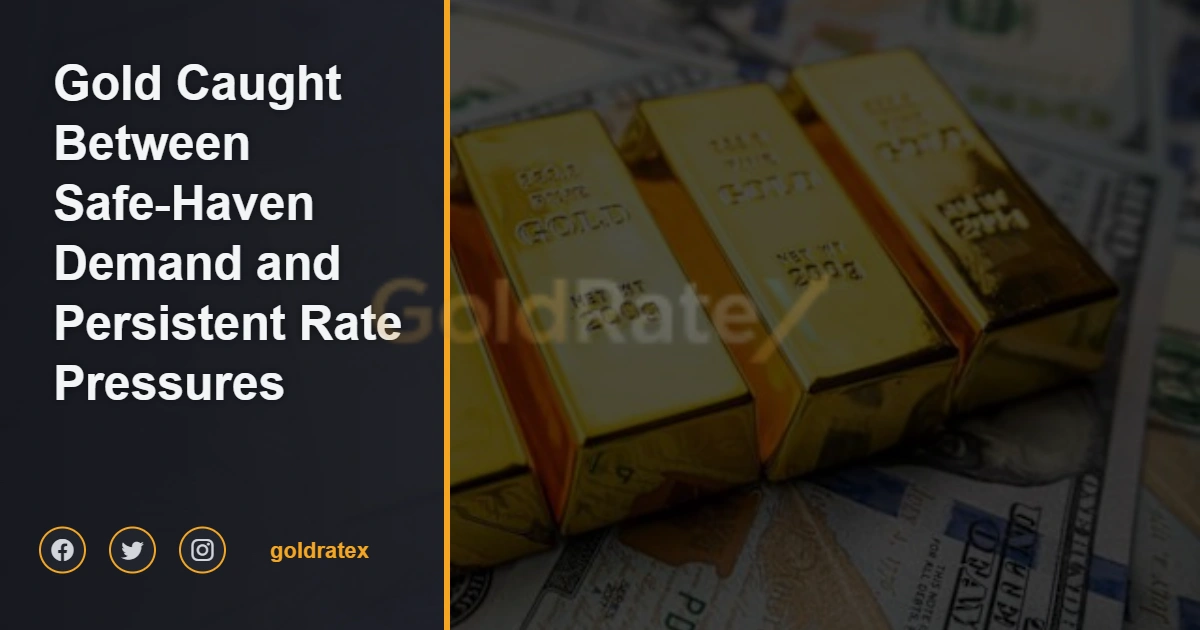
Gold has returned to the centre of geopolitical attention, torn between a surge in safe‑haven buying and the prospect of prolonged higher interest rates. The World Gold Council projects that persistent geopolitical uncertainty will sustain investment demand and central‑bank purchases throughout the year, even as the same tensions lift oil prices and rekindle inflation fears, which traditionally curb appetite for a non‑interest‑bearing asset like gold.
After soaring 65% in 2025 and briefly breaking the $5,000 per ounce barrier, gold has slipped more than 12% since the outbreak of the Iran conflict. Ole Hansen of Saxo Bank notes that the correction does not reflect a fundamental weakening, but a rapid shift in the macro environment following the war. Rising energy costs are reviving inflation concerns, limiting the Federal Reserve's ability to cut rates, and making gold less attractive compared with interest‑bearing alternatives.
The World Gold Council reports that the recent price drops in January and March coincided with outflows from exchange‑traded funds and heightened trading activity, indicating profit‑taking and deleveraging. Despite a sharper decline in March as investors sold gold for liquidity, underlying demand remains robust. Asia is expected to continue leading investment demand, while central‑bank buying should stay near 2025 levels, bolstered by ongoing geopolitical risk and elevated inflation.
Gold’s role as an inflation hedge remains relevant, as it tends to preserve value when currencies lose purchasing power. Louise Street of the WGC adds that geopolitical risks extend beyond the Iran war, encompassing global trade tensions, uncertain U.S. monetary policy, and the Ukraine conflict. Prolonged Middle‑East hostilities could further threaten global growth, potentially increasing safe‑haven demand for gold.
In the first quarter, total gold demand fell 6% quarter‑on‑quarter but rose 2% year‑on‑year to 1,231 metric tons, driven by retail investors. Higher bullion prices lifted demand value to a record $193 billion. Central‑bank purchases grew 3% despite some sales, while gold‑backed ETF inflows slowed relative to a year earlier due to U.S. fund outflows in March. Jewelry demand slumped 23% to 300 tons, the lowest since mid‑2020, as record prices suppressed consumption. Gold futures in New York traded below $4,600 per ounce on Wednesday, with market focus on U.S.–Iran mediation and potential oil price declines following a reopening of the Strait of Hormuz. Goldman Sachs still projects gold to reach $5,400 per ounce by year‑end, citing geopolitical uncertainty and fiscal concerns as catalysts for continued diversification into the metal.