Gold Prices Dip Amid Renewed Concerns Over Hormuz Disruptions
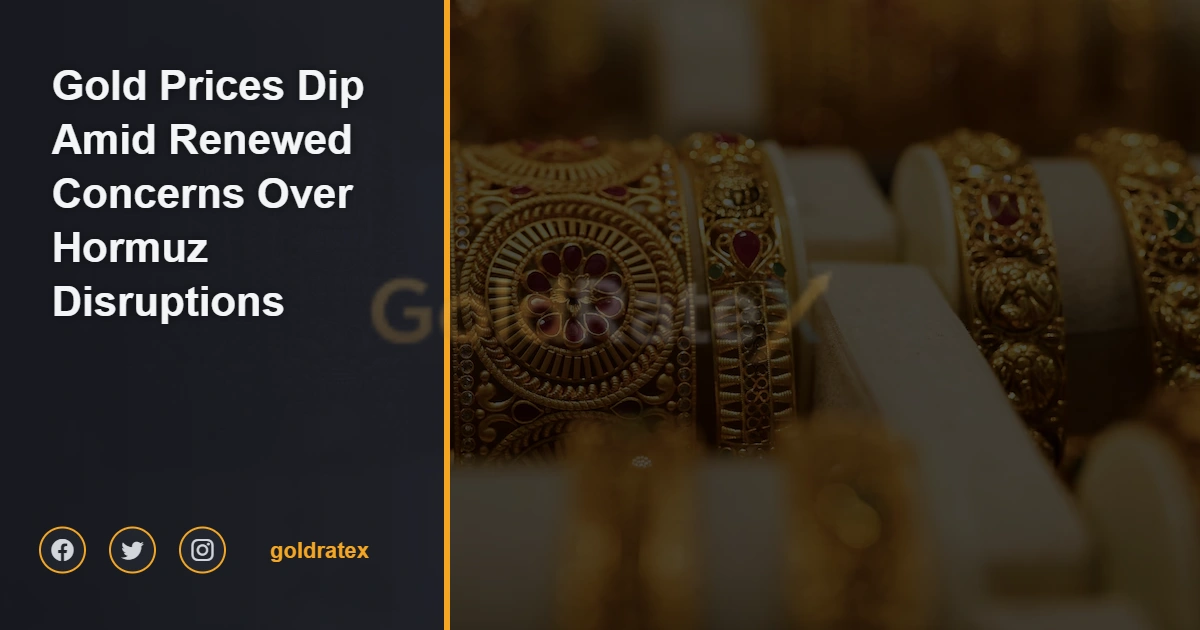
Gold prices fell sharply after vessels were targeted in the Strait of Hormuz over the weekend, raising fresh concerns about potential disruptions in energy supplies. The price of gold dropped by as much as 1.9%, falling below $4,740 an ounce, effectively erasing gains made in the previous week.
President Donald Trump announced that the US Navy had fired upon and seized an Iranian-flagged cargo ship, prompting warnings from Tehran that any ships approaching the strategic waterway would be regarded as violating a ceasefire. This escalation forced several vessels to abandon their crossings just hours after Iranian officials declared the strait to be 'completely open'.
The recent turmoil casts doubt on the prospects for peace talks scheduled in Islamabad this week. Trump expressed optimism about a potential deal but reiterated threats against Iranian infrastructure, while Tehran dismissed any hope for fruitful negotiations. Kyle Rodda, an analyst at Capital.com, remarked that 'war trades are back on, which means gold is being sold'. He noted that the market is likely to be heavily influenced by news headlines, indicating potential for volatility in both directions.
Meanwhile, oil and natural gas prices surged on Monday after a decline in previous sessions. US equity futures dipped, and the dollar strengthened by 0.3%, putting additional pressure on gold prices, which are denominated in US currency. The ongoing conflict has led to significant market volatility, emphasizing the fragility of the ceasefire set to expire on Tuesday.
The prolonged war has caused an unprecedented energy supply shock, intensifying inflationary pressures. This scenario increases the likelihood that central banks will maintain current interest rates or even consider raising them, which poses a challenge for non-yielding gold. Since the onset of the conflict in late February, gold has lost approximately 10% of its value.
Investors are closely monitoring the US Senate confirmation hearing for Kevin Warsh, Trump's nominee to lead the Federal Reserve. Any indication that Warsh may advocate for monetary easing later this year could provide support for gold prices, while a cautious approach towards inflation and reluctance to lower rates would likely be detrimental to the yellow metal. Lorenzo Portelli, head of cross-asset strategy at Amundi, commented that the inflationary effects from the energy shock are expected to be temporary rather than lasting, suggesting that core inflation remains more controlled than during the energy crisis of 2022.
As of 8:56 a.m. in Singapore, spot gold had declined by 1.4% to $4,763.66 an ounce, while silver slid 1.7% to $79.50 an ounce, and both platinum and palladium also faced losses. The Bloomberg Dollar Spot Index increased by 0.2%.