U.S. Treasury Secretary: Strong Dollar Policy Remains, No Intervention to Support Yen
U.S. Treasury Secretary Scott Bessent reaffirmed Washington’s strong dollar policy, firmly denying any U.S. intervention in currency markets to support the Japanese yen, comments that helped lift the dollar after it hit a four-year low.
U.S. Treasury Secretary Scott Bessent reaffirmed Washington’s commitment to a “strong dollar” policy on Wednesday, stressing that such a stance is rooted in solid economic fundamentals rather than direct intervention in currency markets. He firmly denied any U.S. involvement aimed at propping up the Japanese yen.
Speaking to CNBC, Bessent was asked whether the United States was stepping in to support the yen. “Absolutely not,” he replied. When pressed on whether such action could be considered in the future, he reiterated that U.S. officials do not comment on currency operations beyond stating their adherence to a strong dollar policy.
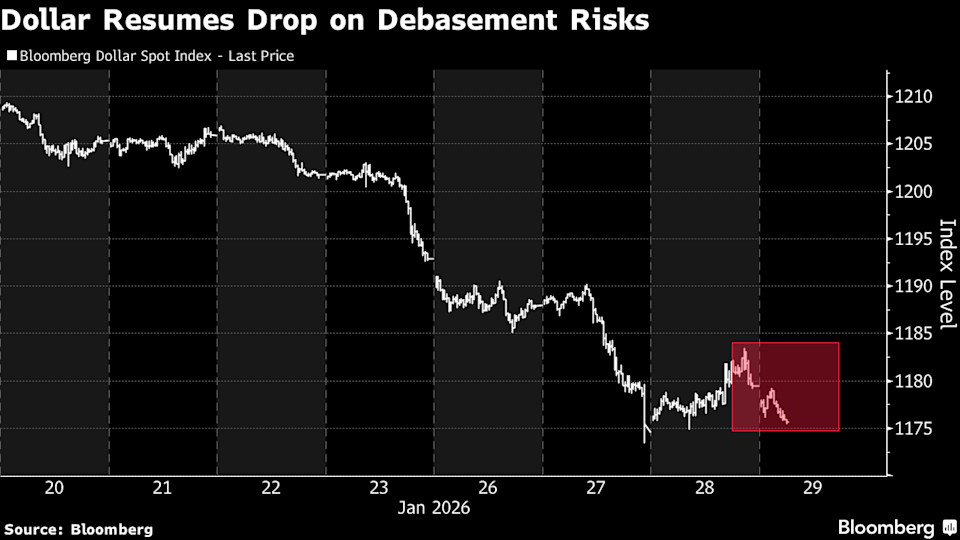
His remarks helped lift the dollar against a basket of major currencies, pushing it higher on Wednesday after the greenback had slid to a four-year low in the previous session.
The dollar index, which tracks the U.S. currency against a group of key peers, rose 0.5% to 96.391. On Tuesday, the index had fallen to 95.86 — its weakest level since February 2022 — after President Donald Trump downplayed the recent decline, encouraging investors to step up bets against the dollar.
Despite Wednesday’s rebound, the dollar index remains nearly 2% lower for the year, following a sharp 9.4% drop in 2024.
Trump said on Tuesday that the dollar was “great” when asked whether it had fallen too far. Markets interpreted the comment as a signal to continue selling the currency, particularly ahead of a Federal Reserve policy decision later in the day.
The dollar has been under sustained pressure amid uncertainty over U.S. interest rates and trade tariffs, concerns about the Federal Reserve’s independence, and widening fiscal deficits.
Meanwhile, gold — a traditional safe-haven asset that tends to benefit from a weaker dollar and offers no yield — surged to a record high, surpassing $5,300 an ounce for the first time.
Bessent voiced confidence that Trump’s tax cuts and deregulation agenda are enhancing the United States’ appeal to global investors, drawing trillions of dollars into the economy.
“Over six months or a year, prices on the screen can move around,” Bessent said. “But if we maintain sound policies, capital will flow in. As we reduce our trade deficits, that should naturally translate into a stronger dollar over time.”
He also reiterated his expectation that the U.S. economy will perform strongly this year, while playing down concerns that faster growth could reignite inflation. Improvements in productivity and wage gains do not automatically lead to higher inflation, he said, adding that falling rents could eventually help push measured inflation lower.